
 01727 800372

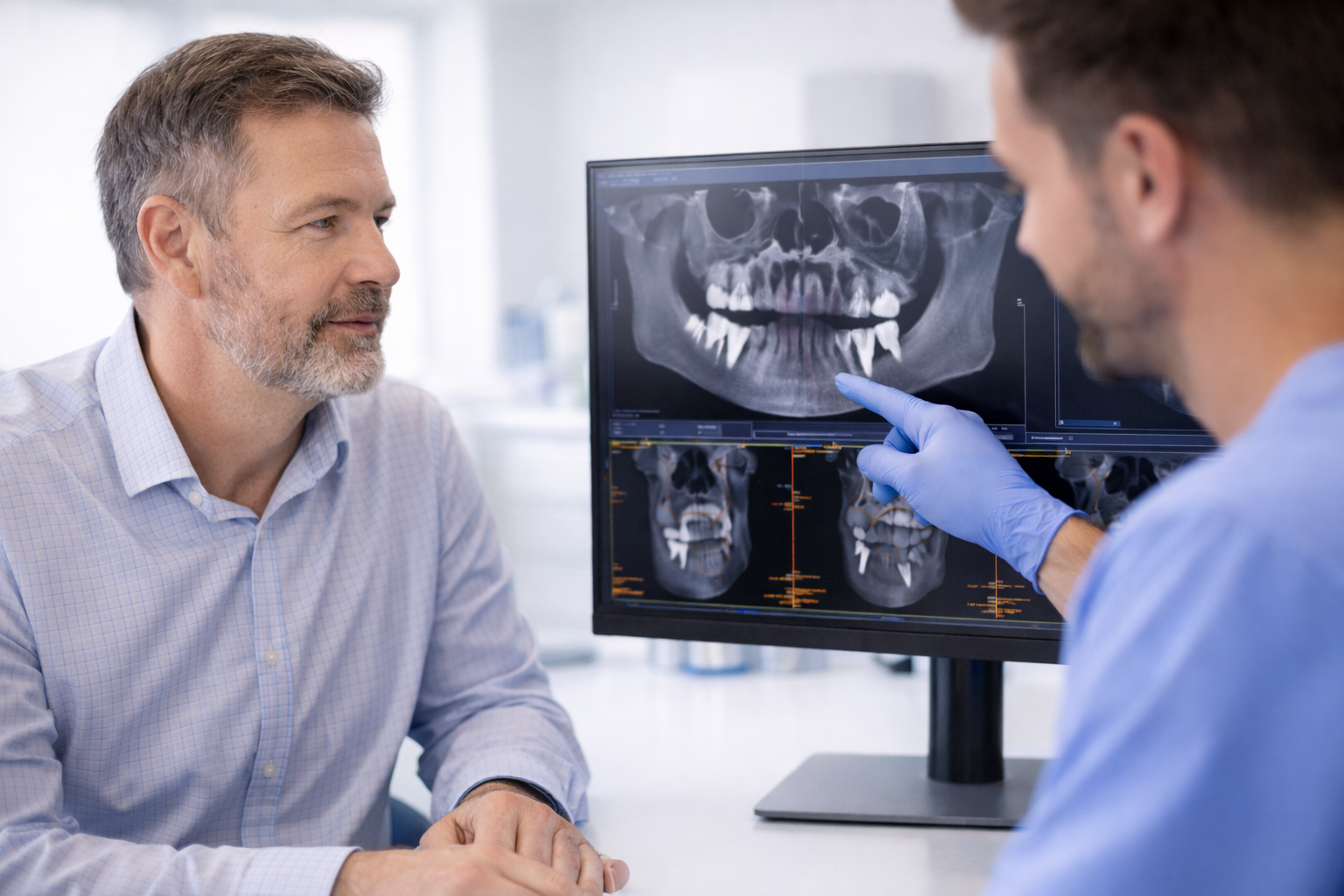
Losing a tooth isn’t always dramatic. Sometimes it happens gradually — a failed crown, a cracked tooth that couldn’t be saved, or a gap you’ve simply learned to live with. But over time, missing teeth often affect far more than just your smile.
Gareth, a 52-year-old living in St Albans, lost a molar several years ago. At first, it didn’t bother him much. But slowly, he noticed changes: chewing felt awkward, food got trapped more easily, and he found himself smiling less in photos. When he finally started looking into treatment, he was surprised by how many options there were — dental implants, bridges, dentures. How do you choose?
Do you live in or near St. Albans? Are you struggling with missing teeth? We can help you! Contact UK Dental Specialists and book a consultation to discuss Dental Implants St Albans. Our friendly, professional, and highly experienced team is here and happy to help you!
Why Replacing Missing Teeth Matters
Replacing missing teeth isn’t just about appearance. When a gap is left untreated, neighbouring teeth can start to shift, your bite may change, and the jawbone beneath the missing tooth can gradually shrink due to lack of stimulation.
Over time, this can affect facial structure, make future treatment more complex, and increase strain on remaining teeth. For Gareth, it wasn’t the gap itself — it was the knock-on effects that made him realise something needed to change.
What Are Dental Implants?
Dental implants are widely considered the most advanced way to replace missing teeth. They involve placing a small titanium post into the jawbone, which acts like a natural tooth root. Once healed, a crown, bridge, or denture is securely attached on top.
Implants can replace:
- A single missing tooth
- Multiple missing teeth
- Even a full set of teeth
One of their biggest advantages is stability. Because implants integrate with the bone, they help preserve jawbone health and feel very similar to natural teeth when eating or speaking.
They’re often ideal for patients looking for a long-term, fixed solution — provided general oral health and bone levels are suitable.
What Are Dental Bridges?
A dental bridge replaces a missing tooth by anchoring a false tooth to the neighbouring teeth on either side. These supporting teeth are shaped to hold the bridge securely in place.
Bridges can be a good option when:
- Adjacent teeth already need crowns
- Surgery isn’t suitable
- A quicker solution is preferred
However, bridges rely on the surrounding teeth for support and don’t prevent bone loss in the area of the missing tooth. For some patients, this is an acceptable trade-off; for others, it’s an important consideration.
What Are Dentures?
Dentures are removable appliances used to replace one or more missing teeth. They come in two main types: partial dentures (replacing some teeth) and full dentures (replacing all teeth in an arch).
Modern dentures are far more comfortable and natural-looking than many people expect. They can be a practical, cost-effective solution — particularly for patients missing multiple teeth or those who prefer a non-surgical option.
That said, dentures can sometimes move, require adjustments over time, and don’t provide the same stability as fixed solutions.
Key Differences Between Implants, Bridges and Dentures
The main differences come down to stability, longevity, and impact on oral health.
- Stability: Implants are fixed and feel most like natural teeth. Bridges are fixed but rely on other teeth. Dentures are removable.
- Jawbone health: Only implants actively help preserve bone.
- Longevity: Implants are designed as long-term solutions, while bridges and dentures may need replacement over time.
- Maintenance: All options require good oral hygiene, but care routines differ slightly.
Which Option Is Right for You?
There’s no single “best” solution — only the most suitable one for you.
The right choice depends on several factors:
- How many teeth are missing
- The health of your jawbone and gums
- Budget considerations
- Personal priorities around comfort, longevity, and convenience
For Gareth, stability and long-term confidence mattered most, which led him to explore dental implants. For others, a bridge or denture may be the perfect fit.
Can Treatment Options Be Combined?
Yes. In many cases, implants can be used to support bridges or dentures, creating a tailored solution that balances stability, comfort, and cost.
This flexibility is why a thorough consultation and personalised treatment plan are so important.
Final Thoughts
Dental implants, bridges, and dentures all play an important role in modern dentistry. Understanding the differences empowers you to make a decision based on facts — not fear or confusion.
For Dental Implants St Albans – click here. We are a leading local dental implants provider with highly experienced implant surgeons. We’d love to meet you to discuss you case.
* Patient stories shared here may be fictional representations inspired by real cases, created to help show the positive impact these treatments can have.