
 01727 800372

It’s a question many patients ask.
If you’ve already taken antibiotics for a dental infection, you may wonder why your dentist or endodontist is still recommending root canal treatment. If the antibiotics have worked and you’re starting to feel better, why isn’t that the end of the problem?
The answer lies in understanding where the infection is and what antibiotics can and cannot do.
What Causes a Tooth Infection?
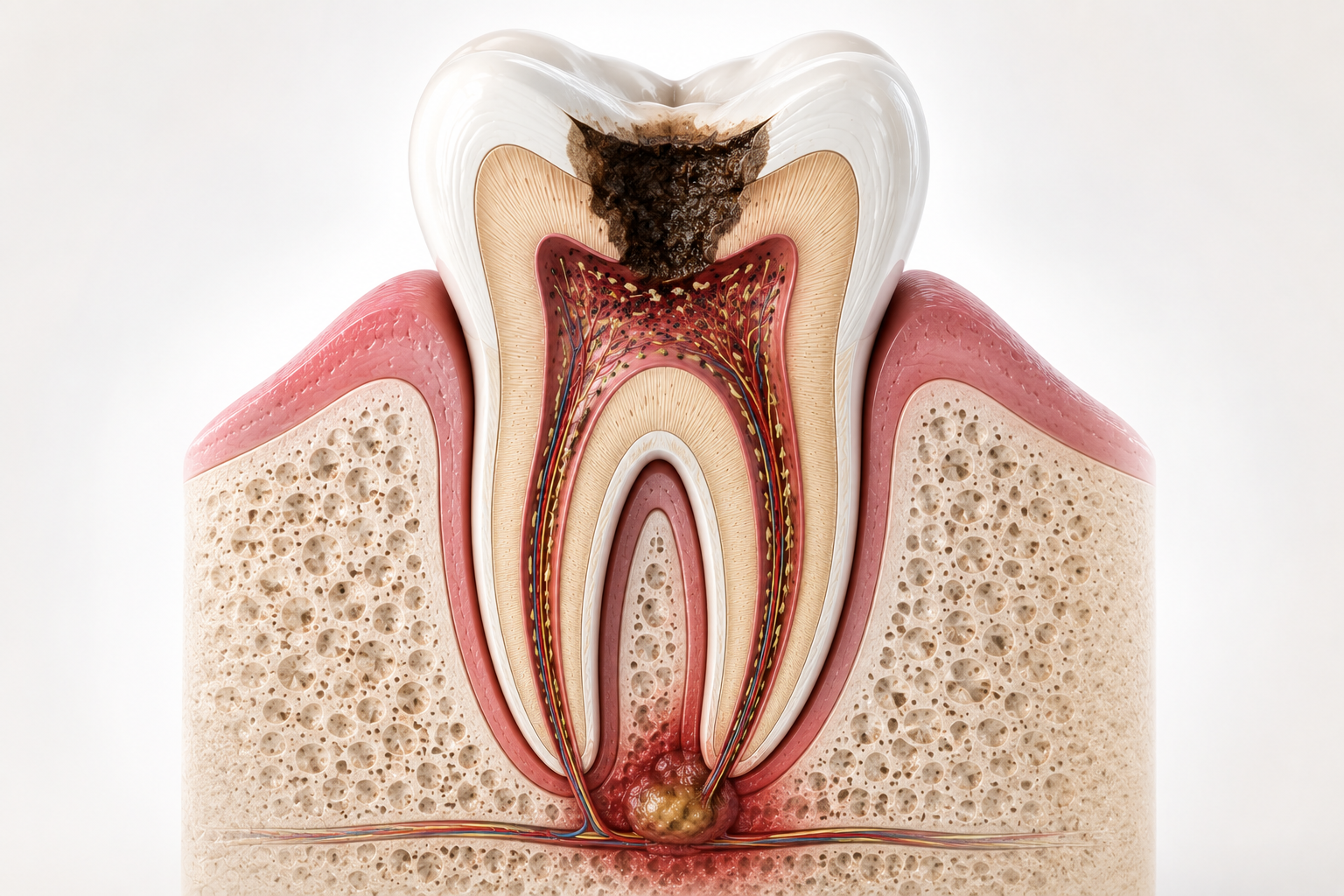
Inside every tooth is a soft tissue called the pulp, which contains nerves and blood vessels.
If deep decay, a crack or trauma allows bacteria to reach the pulp, it can become inflamed or infected. Once this happens, bacteria can multiply within the root canal system inside the tooth.
The infection may cause pain, swelling or a dental abscess, but the source of the problem remains inside the tooth itself.
What Do Antibiotics Do?
Antibiotics can play an important role when a dental infection has spread into the surrounding tissues, is causing signs of systemic illness, or when immediate dental treatment is not possible.
As the infection around the tooth begins to settle, you may notice that swelling reduces and you start to feel better.
However, this does not necessarily mean the source of the infection inside the tooth has been removed.
Why Aren’t Antibiotics Enough?
Antibiotics travel around the body in the bloodstream. They can help control infection in the tissues surrounding a tooth, but they cannot reliably eliminate bacteria sheltered within the root canal system.
When the pulp inside a tooth has died, there is no functioning blood supply within that tissue. This means antibiotics cannot effectively reach the bacteria inside the tooth itself.
As a result, antibiotics may reduce swelling or help control the spread of infection without removing its source. Symptoms may improve temporarily, but they can return because the infection inside the tooth remains.
How Root Canal Treatment Solves the Problem
Root canal treatment is designed to remove the source of the infection.
During treatment, the infected or damaged pulp is removed, the root canal system is carefully cleaned and disinfected, and the canals are sealed to help prevent bacteria from re-entering the tooth.
This treats the source of the infection rather than simply helping to control its effects. Where the tooth can be predictably saved, root canal treatment often allows you to keep your natural tooth.
If a tooth cannot be restored successfully, extraction may be the more appropriate option. Your clinician will discuss the most suitable treatment based on your individual circumstances.
Does Every Tooth Infection Need Antibiotics?
No.
Many teeth requiring root canal treatment can be treated successfully without antibiotics. The priority is usually to remove the source of the infection through appropriate dental treatment.
Your clinician will only recommend antibiotics when they are clinically indicated, such as if the infection has spread beyond the tooth, you have signs of systemic illness, or there are other factors that make antibiotics appropriate.
Don’t Ignore Symptoms Just Because They Improve
If your tooth feels better after taking antibiotics, it can be tempting to think the problem has resolved.
Unfortunately, symptoms improving does not necessarily mean the infection inside the tooth has gone. Without definitive treatment, the infection can persist and may flare up again in the future.
If root canal treatment has been recommended, it is because your clinician believes it offers the best opportunity to remove the source of the infection while preserving your natural tooth whenever possible.
When Should You Seek Urgent Advice?
If you have a dental infection and develop rapidly increasing swelling, swelling that affects your face or neck, difficulty swallowing or breathing, or you feel generally very unwell, you should seek urgent dental or medical advice immediately. These symptoms may indicate that the infection is spreading and requires prompt assessment.
FAQs
If the Antibiotics Worked, Why Do I Still Need Root Canal Treatment?
Antibiotics can help control infection in the surrounding tissues, but they cannot reliably eliminate bacteria from inside the root canal system. Root canal treatment removes the source of the infection within the tooth.
Can Antibiotics Cure a Tooth Infection Permanently?
Not usually. While they may help control the spread of infection or reduce symptoms, antibiotics alone do not remove infected tissue or bacteria from inside the tooth.
Why Has My Tooth Stopped Hurting After Antibiotics?
A reduction in pain or swelling often means the surrounding infection has improved. It does not necessarily mean the infection inside the tooth has gone.
Can Root Canal Treatment Save My Tooth?
In many cases, yes. Root canal treatment is designed to remove infection from inside the tooth while preserving the natural tooth whenever it is clinically appropriate to do so.