
 01727 800372


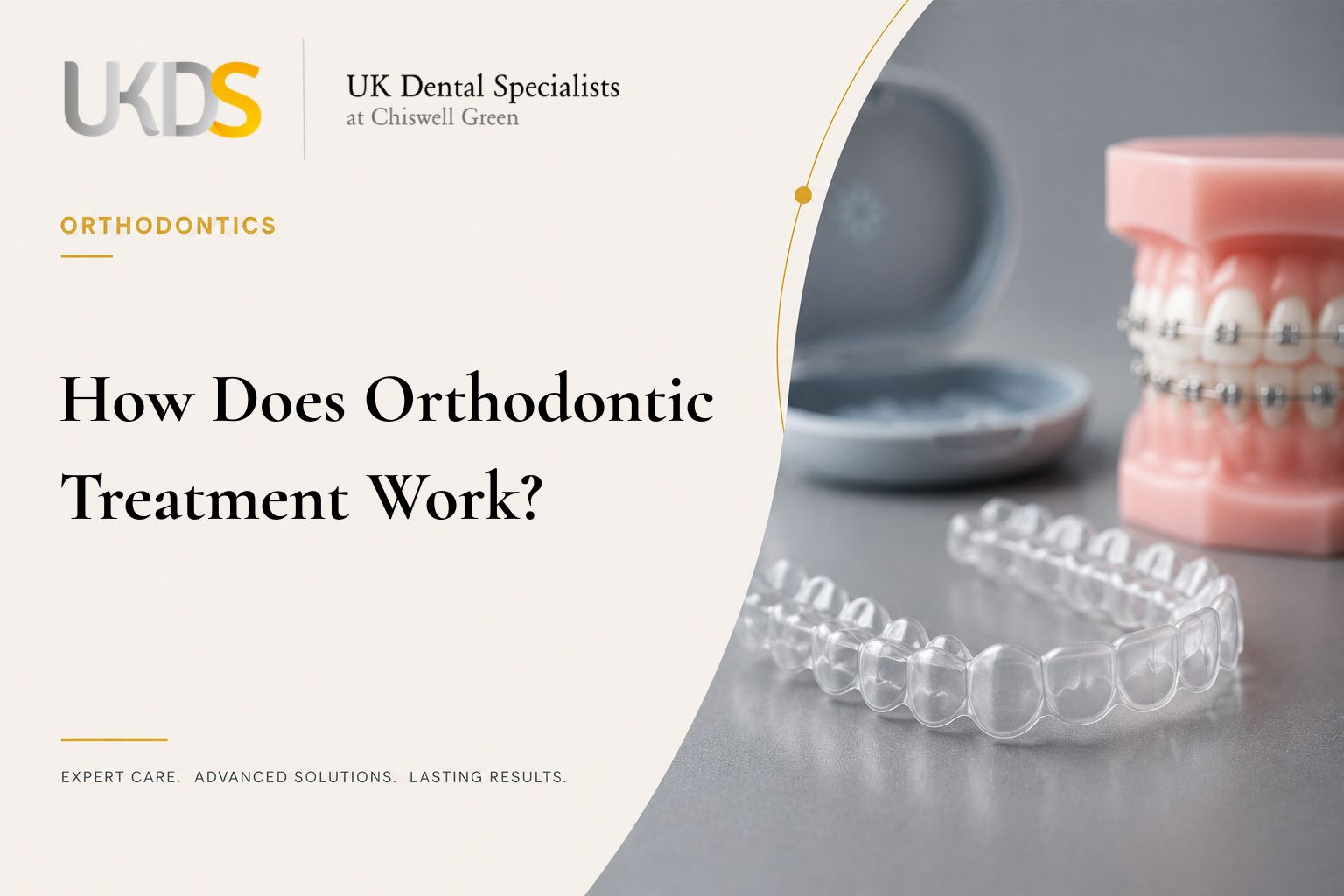
If you’ve ever wondered how braces can straighten teeth that have been crooked for years, the answer is surprisingly interesting. Teeth might feel firmly fixed in place, but they can gradually move when gentle, carefully controlled pressure is applied.
Orthodontic treatment works by using braces or clear aligners to guide teeth into new positions. As the teeth move, the bone and supporting tissues around their roots gradually adapt, allowing them to settle into a different alignment.
This process happens slowly, which is why orthodontic treatment usually takes months rather than weeks.
Understanding how it works can help explain why appointments, adjustments and retainers are all important parts of achieving and maintaining straighter teeth.
How Can Teeth Move When They’re Fixed in Your Jaw?
It might seem unusual that teeth can move at all. After all, they need to be firmly supported so that you can bite and chew comfortably.
However, your teeth aren’t attached directly to the jawbone.
Each tooth root is surrounded by a thin layer of tissue called the periodontal ligament. This connects the tooth to the surrounding bone and acts as a natural shock absorber when you chew.
When braces or aligners apply a controlled force to a tooth, the ligament responds to that pressure.
This triggers a process called bone remodelling, where the body gradually removes and replaces small amounts of bone around the tooth root.
In simple terms:
- Bone is gradually broken down in areas where space is needed for the tooth to move.
- New bone forms in other areas to help support the tooth in its changing position.
- The surrounding ligament and tissues gradually adapt as the tooth moves.
This ongoing process allows teeth to move through the jawbone without becoming detached from it.
The movement is carefully planned because applying excessive force does not necessarily make treatment faster and may increase the risk of damaging the teeth or their supporting structures.
How Do Braces Actually Straighten Teeth?
Traditional fixed braces use small brackets attached to the teeth, connected by a flexible orthodontic wire.
The wire is designed to apply forces that gradually guide teeth towards their planned positions.
As the teeth move, the orthodontist adjusts or changes the wire when necessary to continue the process.
Different movements may be needed depending on the problem being corrected.
For example, orthodontic treatment can help:
- Straighten teeth that are crowded or overlapping.
- Close unwanted gaps between teeth.
- Rotate teeth that are twisted.
- Move teeth that lean too far forwards or backwards.
- Improve the way upper and lower teeth meet when biting.
Some tooth movements are relatively straightforward, while others require more precise control over the position of the tooth root as well as the visible part of the tooth.
This is why orthodontic treatment involves more than simply making the front teeth look straight.
The orthodontist must also consider how the teeth function together and whether the final positions can be supported by the surrounding bone and gums.
How Do Clear Aligners Move Teeth?
Clear aligners work through the same biological process as fixed braces, but they apply pressure differently.
Instead of brackets and wires, clear aligner treatment uses a series of custom-made, removable plastic trays that fit closely over the teeth.
Each aligner is designed to produce specific small changes in tooth position.
As you progress through the series, your teeth gradually move towards the positions planned by your orthodontist.
Some treatments also use small tooth-coloured attachments bonded to the teeth. These help the aligners grip particular teeth and produce movements that may otherwise be more difficult to achieve.
Aligners must be worn for the recommended number of hours each day to work as intended.
Although clear aligners can be effective for many orthodontic problems, they aren’t necessarily the best option for every patient.
More complex tooth movements or bite corrections may be better managed with fixed braces or a combination of approaches.
At UK Dental Specialists in St Albans, orthodontic options include fixed braces and Invisalign clear aligners. Your specialist orthodontist can assess your teeth and bite before recommending the most appropriate approach.
Why Does Orthodontic Treatment Take So Long?
One of the most common questions patients ask is why teeth cannot simply be moved into place more quickly.
The main reason is that orthodontic treatment depends on the body’s natural biological response.
Although braces and aligners apply the forces needed to move teeth, the supporting bone and periodontal ligament need time to adapt.
Trying to move teeth too aggressively can increase the risk of complications, including damage to the tooth roots or supporting tissues.
Treatment also often involves several different types of movement.
For example, crowded teeth may first need to be aligned before the orthodontist can refine their positions and correct the way they meet when biting.
The time required depends on several factors, including:
- How crowded or misaligned the teeth are.
- Whether the bite also needs correcting.
- The type of orthodontic appliance being used.
- How the teeth and supporting tissues respond.
- Whether appliances are worn and cared for as instructed.
The NHS explains that many courses of orthodontic treatment last approximately 12–24 months, although some cases take less time and others considerably longer.
Your orthodontist will provide a more individual estimate after examining your teeth.
Does Orthodontic Treatment Hurt While Teeth Are Moving?
Orthodontic tooth movement can cause temporary tenderness, particularly when braces are first fitted, adjusted or when you begin wearing a new aligner.
This happens because the pressure on the teeth causes changes in the periodontal ligament and surrounding tissues.
Patients often describe the sensation as pressure or soreness rather than sharp pain.
It is usually most noticeable during the first few days after an adjustment and then gradually settles.
Eating softer foods for a short period may help if your teeth feel tender.
However, severe or persistent pain should not simply be accepted as part of orthodontic treatment. If you experience significant discomfort, a broken appliance or unusual symptoms, contact your orthodontic team for advice.
Why Do You Need Regular Orthodontic Appointments?
Teeth don’t always move at exactly the same rate, even when treatment is carefully planned.
Regular appointments allow your orthodontist to check how your teeth are responding and whether treatment is progressing as expected.
With fixed braces, appointments may involve adjusting the wires, changing components or introducing additional forces to guide particular teeth.
With clear aligners, your orthodontist will check that the trays are fitting correctly and that the teeth are following the planned movements.
These appointments also provide an opportunity to monitor your oral health.
Braces can make cleaning around the teeth more challenging, and poor oral hygiene during treatment can increase the risk of tooth decay and gum inflammation.
Attending your scheduled orthodontic appointments and maintaining regular dental examinations are both important throughout treatment.
Can Orthodontic Treatment Change Your Bite as Well as Straighten Your Teeth?
Yes. Orthodontics isn’t only concerned with the appearance of your teeth.
Your bite describes how your upper and lower teeth come together when you close your mouth.
If they don’t meet in a balanced way, you may have an orthodontic problem such as an overbite, underbite, crossbite or open bite.
Orthodontic appliances can move teeth to improve how they meet, helping address certain bite problems as well as crowding or spacing.
However, not every bite problem can be corrected by moving teeth alone.
Some people have differences in the underlying position or size of their jaws. In growing patients, certain appliances may help guide jaw development. More significant jaw discrepancies in adults sometimes require combined orthodontic and surgical treatment.
An orthodontic assessment helps determine whether the problem is primarily related to tooth position, jaw position or a combination of both.
Why Do Teeth Need Retainers After Orthodontic Treatment?
Even after your teeth have reached their planned positions, the tissues supporting them need time to adapt.
Teeth also naturally change position throughout life.
Without retainers, there is a risk that teeth will gradually move away from their corrected positions. This is known as orthodontic relapse.
Retainers help reduce this movement by holding the teeth in place after active treatment has finished.
There are two main types:
- Removable retainers: Custom-made appliances that fit over or around the teeth and are worn according to your orthodontist’s instructions.
- Fixed retainers: Thin wires bonded to the back of selected teeth to help maintain their alignment.
Some patients benefit from a combination of both.
The British Orthodontic Society recommends long-term retention because teeth can continue to change position with age, even many years after orthodontic treatment.
Your orthodontist will explain which type of retainer is appropriate and how it should be worn and maintained.
Understanding Your Orthodontic Treatment Options
Orthodontic treatment is possible because teeth and their supporting tissues can respond to carefully controlled forces.
Whether those forces are applied using fixed braces or clear aligners, the underlying process is the same: the teeth gradually move as the surrounding bone and tissues adapt.
The most appropriate treatment will depend on your individual tooth alignment, bite, oral health and the movements required.
At UK Dental Specialists in St Albans, patients can receive an individual assessment from a specialist orthodontist, who can explain the available options and how treatment may work for their particular needs.
If you’re considering straightening your teeth, an orthodontic consultation can help you understand what is possible and what to expect before deciding whether to proceed.
Frequently Asked Questions About Orthodontic Treatment
Can Adults Have Orthodontic Treatment, or Is It Only for Children?
Orthodontic treatment isn’t just for children and teenagers. Adults can also have their teeth straightened, provided their teeth and gums are sufficiently healthy. Although jaw growth is largely complete in adults, teeth can still be moved using braces or clear aligners. Your orthodontist will assess your oral health and the type of correction needed before recommending treatment.
Can Orthodontic Treatment Damage Your Teeth?
Orthodontic treatment is generally safe when carefully planned and monitored, but there are some risks. Poor cleaning around braces can increase the likelihood of tooth decay and gum problems, while some patients experience shortening of the tooth roots during treatment. Following your orthodontist’s instructions and attending regular appointments helps reduce these risks.
Do You Need to Have Teeth Removed Before Getting Braces?
Not everyone needs teeth removed before orthodontic treatment. In some cases, particularly where there is significant crowding, removing one or more teeth may help create the space needed for alignment. However, other approaches may be suitable depending on your teeth, bite and jaw structure. Your orthodontist will explain whether extractions are necessary and discuss the available alternatives.
Can You Eat Normally While Wearing Braces or Clear Aligners?
Most patients can continue enjoying a varied diet during orthodontic treatment, although some adjustments may be needed. With fixed braces, hard, sticky or particularly chewy foods can damage brackets and wires. Clear aligners are usually removed when eating, allowing greater dietary flexibility. Good oral hygiene remains important whichever appliance you use.
What Happens If You Miss an Orthodontic Appointment?
Missing an occasional appointment doesn’t necessarily mean your treatment will be unsuccessful, but repeated delays can affect progress. Regular reviews allow your orthodontist to check tooth movement, adjust appliances and identify potential problems. If you cannot attend an appointment, contact your orthodontic team to arrange another suitable date rather than waiting until your next scheduled visit.