
 01727 800372


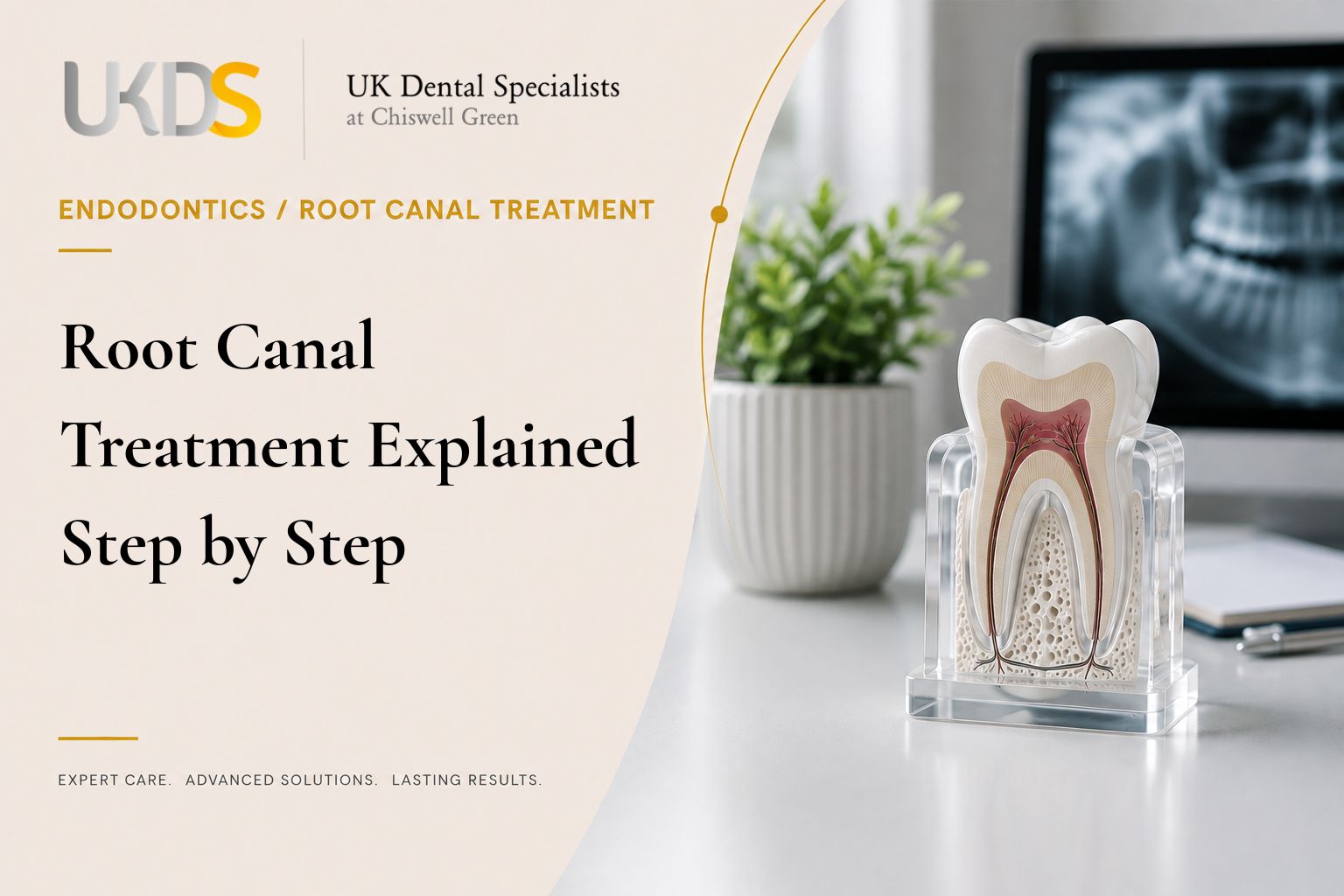
If you’ve been told you need root canal treatment, you may be wondering what actually happens during the procedure. Will it hurt? How long will you be in the dental chair? And what happens to your tooth once the treatment is finished?
Root canal treatment is designed to save a tooth when the soft tissue inside it has become infected or irreversibly damaged. Rather than removing the tooth, your dentist carefully cleans the inside, removes the affected tissue and seals the root canals to help prevent further infection.
Although the procedure has a reputation for being uncomfortable, it is normally carried out under local anaesthetic, and most patients can remain awake and comfortable throughout.
Understanding the different stages can make treatment feel much less daunting.
Why Might You Need Root Canal Treatment?
To understand how root canal treatment works, it helps to know a little about the structure of your tooth.
Beneath the hard outer layers of enamel and dentine is a soft tissue called the dental pulp. This contains nerves, blood vessels and connective tissue.
The pulp extends from the centre of the tooth down through narrow passages inside its roots. These passages are known as root canals.
If bacteria reach the pulp through deep tooth decay, a crack or an injury, the tissue can become inflamed or infected.
This may cause symptoms such as:
- Persistent toothache.
- Lingering sensitivity to hot or cold drinks.
- Pain when biting or chewing.
- Swelling or tenderness around the affected tooth.
- A small swelling on the gum, sometimes called a gum boil.
However, an infected tooth does not always cause pain.
When the pulp becomes irreversibly damaged or infected, root canal treatment may be recommended to remove the affected tissue and preserve the natural tooth.
The alternative may be extraction if the tooth cannot be saved.
Step 1: Examination and Diagnosis
Before treatment begins, your dentist needs to establish what is causing the problem and whether root canal treatment is suitable.
This involves examining the affected tooth, discussing your symptoms and reviewing your dental history.
Your dentist may carry out tests to assess how the tooth responds to temperature or pressure. X-rays are also commonly used to examine the roots and surrounding bone.
These investigations help determine whether the pulp is damaged or infected and whether the tooth can be successfully restored after treatment.
Some teeth are more complicated to treat than others. For example, molars often have several roots and narrow, curved canals that can be difficult to access and clean.
In these situations, treatment by an endodontist — a dentist specialising in problems affecting the inside of teeth — may be appropriate.
At UK Dental Specialists in St Albans, patients can be assessed by a registered specialist in endodontics. The consultation includes discussing the diagnosis, available options and recommended treatment before proceeding.
Step 2: Numbing the Tooth with Local Anaesthetic
Once treatment has been agreed, the dentist will usually administer a local anaesthetic to numb the tooth and surrounding area.
This is similar to the anaesthetic used when having a filling.
You will remain awake during the procedure, but the aim is to prevent you from feeling pain.
You may notice pressure, vibration or movement while the dentist works, but these sensations should not be painful.
If the tooth is particularly inflamed, achieving complete numbness can occasionally be more challenging. Your dentist can use additional techniques where necessary.
You should always tell your dentist if you experience discomfort during treatment rather than trying to tolerate it.
Step 3: Protecting the Tooth with a Rubber Dam
Once the area is numb, the dentist isolates the tooth using a thin protective sheet called a rubber dam.
The sheet fits around the tooth being treated, separating it from the rest of the mouth.
This is an important part of root canal treatment because it helps keep saliva and bacteria away from the tooth while the root canals are being cleaned.
It also helps protect your mouth from the small instruments and cleaning solutions used during the procedure.
Although it may feel unfamiliar initially, you can still breathe normally through your nose while the rubber dam is in place.
Step 4: Accessing the Root Canals
The dentist then creates a small opening through the top of the tooth to reach the pulp chamber and root canal system.
If the tooth already has a large filling or crown, the opening may need to be made through that restoration.
The dentist removes the affected pulp tissue and identifies the entrances to the root canals.
This stage requires care because root canals can be extremely narrow, and their number and shape vary from tooth to tooth.
Specialist endodontists may use an operating microscope to provide a magnified view of the treatment area.
At UK Dental Specialists, the endodontic service uses operating microscopes to support precise treatment, particularly when dealing with complex root canal anatomy.
Step 5: Cleaning and Disinfecting the Root Canals
Once the root canals have been located, the next stage is to clean and shape them.
The dentist uses very fine instruments to remove damaged tissue and debris from inside the canals.
The canals are also rinsed with disinfecting solutions to reduce the bacteria responsible for the infection.
Cleaning and shaping the canals serves two purposes.
First, it helps remove infected material from areas that cannot be reached by an ordinary filling.
Second, it prepares the canals so they can be filled and sealed effectively.
This part of the procedure often takes considerable time, particularly in teeth with multiple roots or complex canal systems.
Your dentist may take additional X-rays during treatment to check the length of the canals and help ensure they have been prepared appropriately.
Step 6: Filling and Sealing the Root Canals
After the canals have been thoroughly cleaned and prepared, they are filled with a specialised material.
One commonly used material is gutta-percha, a rubber-like substance that is placed inside the root canals together with a sealing material.
The purpose is to fill the prepared spaces and help prevent bacteria from entering them again.
At UK Dental Specialists, the endodontic treatment process includes filling the prepared canals with gutta-percha and a root canal sealer.
In some cases, this stage can be completed during the same appointment as the cleaning.
However, if the tooth requires further treatment or the infection needs additional management, the dentist may place medication inside the canals and temporarily seal the tooth until a subsequent appointment.
Your dentist will explain whether another visit is necessary.
Step 7: Placing a Temporary Filling
After the root canals have been treated, the opening in the tooth needs to be sealed.
A temporary filling is often placed to protect the tooth until its permanent restoration can be completed.
This helps prevent saliva and bacteria from entering the treated area.
If you have a temporary filling, your dentist may recommend avoiding very hard or sticky foods on that side of your mouth.
It is important not to leave a temporary restoration in place longer than advised. If it becomes loose or falls out, contact your dentist promptly.
Step 8: Restoring the Tooth with a Permanent Filling or Crown
Completing the root canal treatment is not necessarily the final stage of restoring the tooth.
Although the infection inside the root canal system has been treated, the remaining tooth structure may still need protection.
Your dentist will assess how much healthy tooth remains and recommend a suitable permanent restoration.
This may involve a filling, an onlay or a crown.
A dental crown is a protective restoration that covers the tooth. It is often recommended for back teeth that have undergone root canal treatment, particularly when a substantial amount of tooth structure has been lost.
The restoration helps protect the remaining tooth from fracture and provides an important seal against further bacterial contamination.
At UK Dental Specialists, patients receiving specialist endodontic treatment are advised to return to their dentist promptly for the appropriate permanent restoration.
This is an essential part of the overall treatment process, not simply a cosmetic finishing touch.
Step 9: Recovery and Follow-Up Care
Once the treatment is completed, the local anaesthetic will gradually wear off.
Your tooth and the surrounding area may feel tender for a few days, especially when biting.
This is usually temporary and should improve as the tissues recover.
Your dentist may recommend suitable pain relief if needed, taking account of your medical history and any medications you already use.
During recovery, it is sensible to avoid chewing hard foods on the treated tooth until it has been appropriately restored.
You should also continue brushing twice daily with fluoride toothpaste and cleaning between your teeth.
Although the pulp has been removed, the tooth is still surrounded by living tissues. These tissues can become inflamed or infected, so good oral hygiene and regular dental care remain important.
Your dentist may recommend follow-up examinations and X-rays to check that the tissues around the root are healing as expected.
Healing within the surrounding bone can take several months, even when the tooth feels comfortable much sooner.
If you experience severe pain, increasing swelling or symptoms that worsen rather than improve, contact your dentist for advice.
How Many Appointments Does Root Canal Treatment Take?
The number of appointments depends on the tooth being treated and the complexity of the case.
Some root canal treatments can be completed in one visit, while others need two or more appointments.
At UK Dental Specialists, the usual treatment pathway is described as one or two visits, generally lasting around one to one-and-a-half hours each. Additional appointments may be necessary when there are anatomical or technical difficulties.
For example, a tooth with several narrow or curved canals may require more time than a relatively straightforward front tooth.
If you are having root canal retreatment — where an existing root filling needs to be removed and replaced — the procedure may also be more complex.
Your endodontist will explain the anticipated treatment stages after examining the tooth.
Can Root Canal Treatment Always Save a Tooth?
Root canal treatment is an established way of preserving natural teeth, but it cannot guarantee that every tooth will be saved.
The likely outcome depends on factors including:
- The extent of infection or damage.
- The condition of the surrounding bone and gums.
- Whether the root canals can be adequately cleaned and sealed.
- The amount of healthy tooth structure remaining.
- The quality of the final restoration.
Some teeth have fractures or extensive damage that make long-term restoration unlikely.
In these circumstances, your dentist should explain the limitations of treatment and discuss alternatives, including extraction where appropriate.
The aim is always to recommend an option that is clinically suitable for your individual circumstances.
Saving Your Natural Tooth at UK Dental Specialists
Root canal treatment involves several carefully planned stages, from diagnosing the problem and removing infected tissue to sealing the canals and restoring the tooth.
Although it can be a detailed procedure, each stage has a purpose: to manage infection, protect the remaining tooth and give it the best possible chance of being retained.
At UK Dental Specialists in St Albans, registered specialists in endodontics assess and treat complex root canal problems, including cases requiring retreatment. Specialist equipment, including operating microscopes, supports the diagnosis and treatment of challenging teeth.
If you have been advised that you need root canal treatment, a specialist assessment can help establish whether your tooth can be saved and explain what the treatment process would involve.
Understanding your options is the first step towards making an informed decision about your dental health.
Frequently Asked Questions About Root Canal Treatment
Can I Drive Home After Root Canal Treatment?
Yes, most patients can drive home after root canal treatment if they have only received a local anaesthetic. However, your mouth may remain numb for a few hours afterwards. If you have received sedation or medication that affects your ability to drive, you will need to follow your dentist’s advice about travelling home safely.
Can I Eat Before Root Canal Treatment?
You can usually eat normally before root canal treatment carried out under local anaesthetic. In fact, having a meal beforehand may be helpful, as you may need to wait until the numbness has worn off before eating again. If sedation is planned, you will receive specific instructions about eating and drinking before your appointment.
Will My Tooth Feel Different After Root Canal Treatment?
A root-treated tooth no longer contains the living pulp tissue responsible for sensing hot and cold temperatures. However, the tissues surrounding the tooth remain sensitive, so you may still feel pressure when biting or chewing. Once the tooth has healed and been properly restored, it should generally function much like your other teeth.
Can I Go Back to Work After Root Canal Treatment?
Many patients can return to work or their usual daily activities shortly after root canal treatment, particularly when only local anaesthetic has been used. However, some tenderness is normal afterwards, and you may prefer to rest if the procedure has been lengthy. Your dentist can advise you based on the complexity of your treatment and how you feel afterwards.
Can a Tooth Become Infected Again After Root Canal Treatment?
Yes, although root canal treatment aims to remove infection and seal the root canals, reinfection can occasionally occur. This may happen if bacteria enter through a leaking filling or crown, or if parts of a complex root canal system were not fully treated. Depending on the condition of the tooth, further root canal treatment, known as retreatment, may be possible. A specialist endodontic assessment can help determine the most appropriate next step.