


 01727 800 372
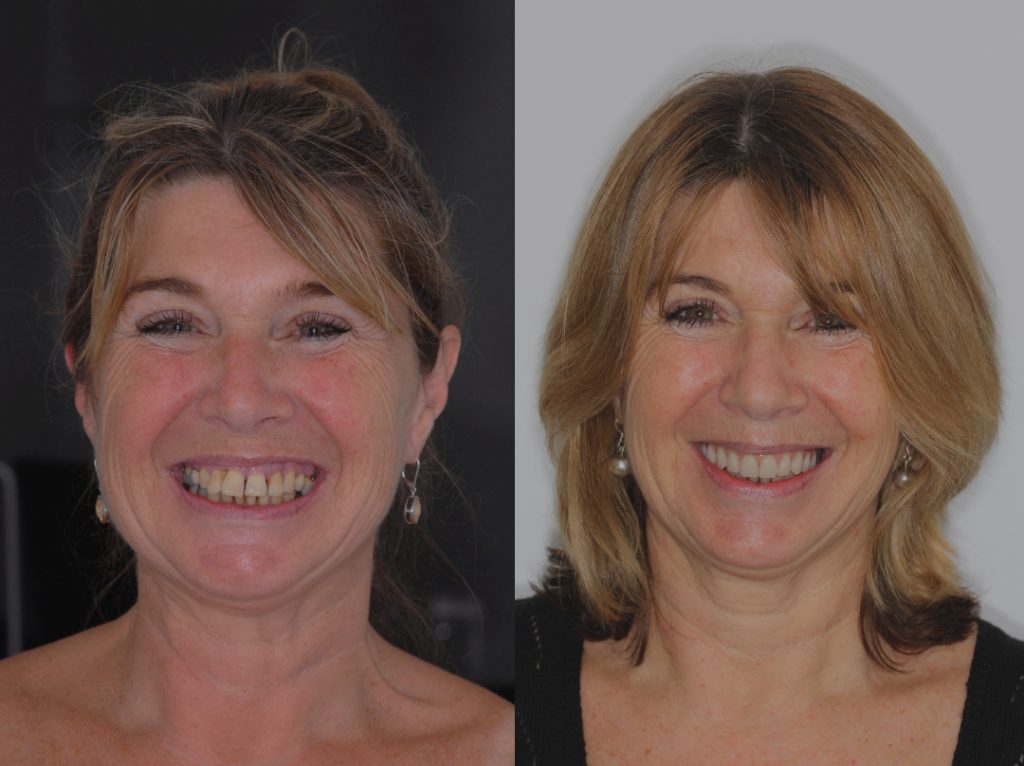
Invisalign at UK Dental Specialists
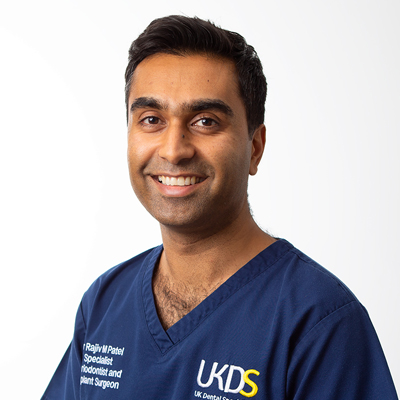
With our highly experienced Implant Surgeon
From £34 per month*
Our team of specialists have over 100+ years combined experience!
Send a Selfie
Meet the specialist team
behind your implant care
When you choose dental implants, you’re trusting people — not just technology.
At UK Dental Specialists in St Albans, your care is led by a team of recognised dental specialists and consultant-level clinicians, many of whom also teach, lecture, and work in leading UK dental hospitals. This depth of experience is what gives patients confidence from the very first appointment.
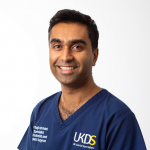
Your treatment is overseen by Dr Rajiv Patel, a registered Specialist Periodontist with over two decades of experience and advanced training from leading UK institutions including Guy’s and King’s College London. He is actively involved in educating other dentists and shaping best practice in gum and implant health — bringing that same level of precision and care to every patient he treats.
The restorative side of your care is guided by Dr Kuljeet (Kali) Ranshi, Dr Kostas Karagiannopoulos and Dr Pranay Patel.
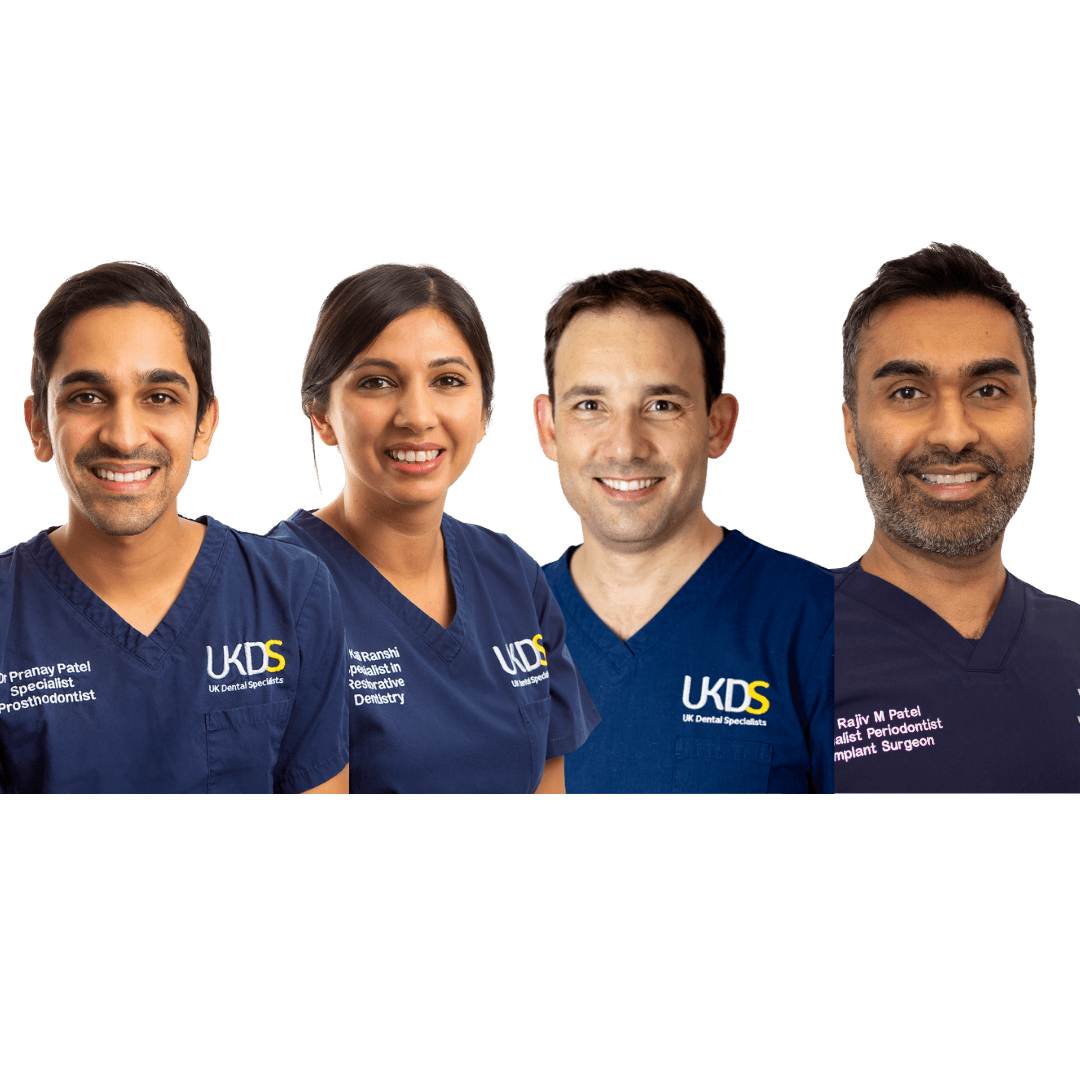

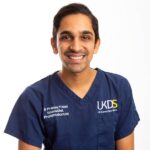
What truly sets this team apart is that they plan and work together. Instead of a single clinician making every decision, your treatment benefits from multiple specialists reviewing each stage — surgical, biological, functional, and aesthetic.
For patients, this means:
- Clear, carefully considered treatment plans
- Fewer compromises and fewer surprises
- Confidence that your implants are designed for long-term health, comfort, and peace of mind
When specialists trust each other to teach, refer, and collaborate — patients benefit from that same level of care.
Why specialist care matters
Choosing dental implants is a big decision — and it’s natural to want reassurance that you’re in the safest hands
Specialist care means your treatment is carefully planned by experts who focus on implant surgery, gum health, and restoring teeth every day. At UK Dental Specialists, a team of specialists works together to look after every detail, so nothing is rushed and nothing is left to chance.
This joined-up approach gives you confidence that your implants are healthy, comfortable, and designed to last — helping you smile, eat, and speak with complete peace of mind.
When you know your care is led by specialists, you can relax and focus on enjoying the results.
Dr Rajiv Patel has placed over 2000 implants for over 15 years with an exceptional success rate of over 97%, reflecting his skill and experience in implant dentistry.
He uses Straumann implants, one of the UK’s leading and most trusted implant brands, known for Swiss-engineered precision, excellent long-term outcomes and high clinical success ratesbacked by extensive research. Straumann’s advanced materials and surface technologies promote faster healing and strong integration with the jawbone, helping patients enjoy more natural function, longevity and durability compared with many alternatives.
What truly differentiates this
specialist team
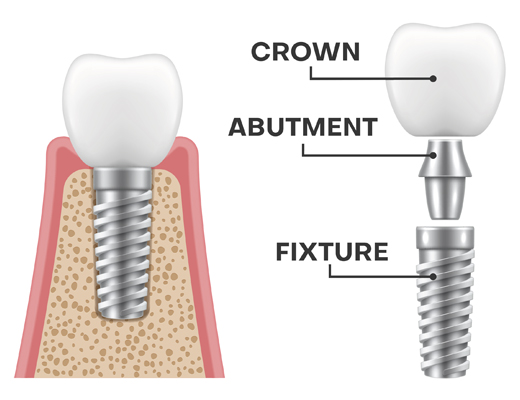
By acting as a tooth root, a dental implant provides a stable foundation for replacement teeth. This allows improved function, speech and aesthetics. An implant can be used to:
-
1. Recognised specialists and consultant-level care
These clinicians are not just experienced — they hold formally recognised specialist and consultant roles in periodontics, prosthodontics, and restorative dentistry. This reflects years of advanced postgraduate training beyond general dentistry and a level of expertise typically involved in managing complex, higher-risk cases.
Why this matters to patients: It means their care is guided by depth of knowledge, not trial-and-error.
-
2. Daily focus on complex implant and restorative cases
Unlike general practices where implants may form a small part of the workload, this team’s day-to-day clinical focus is on implants, advanced restorative dentistry, and managing challenging situations — including bone loss, gum disease, failing implants, and aesthetic complexity.
Why this matters to patients: Their experience comes from repetition and refinement, not occasional exposure. -
3. Multidisciplinary planning, not single-clinician decision-making
Implant treatment is planned collaboratively by a specialist periodontist and specialist prosthodontists, with consultant-level restorative oversight. Each clinician brings a different expert lens — surgical, biological, functional, and aesthetic.
Why this matters to patients: Multiple specialists checking and refining a plan reduces risk and improves long-term outcomes.
-
4. Biology-first approach to long-term implant health
With specialist periodontal leadership, implant treatment is grounded in gum health, bone stability, and disease prevention — factors strongly linked to implant longevity but often underemphasised in general implant provision.
Why this matters to patients: It’s the difference between implants that simply “look good” and implants designed to last.
-
5. Restorative excellence and natural aesthetics
Specialist prosthodontists focus on how implants feel, function, and look — bite, speech, comfort, and natural appearance — not just placement. This level of detail is particularly important for front teeth, full-arch cases, and long-term wear.
Why this matters to patients: The final result feels like your own teeth, not dental work.
-
6. Trusted referral destination
Specialist teams like this commonly receive referrals from other dentists for complex or high-risk cases — a quiet but powerful marker of professional trust and reputation.
Why this matters to patients:
If other dentists trust them with difficult cases, patients can too.
Ask our Experts
“Great clinic and great staff! Professional, friendly and supportive.”
What truly differentiates this specialist team
By acting as a tooth root, a dental implant provides a stable foundation for replacement teeth. This allows improved function, speech and aesthetics. An implant can be used to:
-
1. Recognised specialists and consultant-level care
These clinicians are not just experienced — they hold formally recognised specialist and consultant roles in periodontics, prosthodontics, and restorative dentistry. This reflects years of advanced postgraduate training beyond general dentistry and a level of expertise typically involved in managing complex, higher-risk cases.
Why this matters to patients: It means their care is guided by depth of knowledge, not trial-and-error.
-
2. Daily focus on complex implant and restorative cases
Unlike general practices where implants may form a small part of the workload, this team’s day-to-day clinical focus is on implants, advanced restorative dentistry, and managing challenging situations — including bone loss, gum disease, failing implants, and aesthetic complexity.
Why this matters to patients: Their experience comes from repetition and refinement, not occasional exposure. -
3. Multidisciplinary planning, not single-clinician decision-making
Implant treatment is planned collaboratively by a specialist periodontist and specialist prosthodontists, with consultant-level restorative oversight. Each clinician brings a different expert lens — surgical, biological, functional, and aesthetic.
Why this matters to patients: Multiple specialists checking and refining a plan reduces risk and improves long-term outcomes.
-
4. Biology-first approach to long-term implant health
With specialist periodontal leadership, implant treatment is grounded in gum health, bone stability, and disease prevention — factors strongly linked to implant longevity but often underemphasised in general implant provision.
Why this matters to patients: It’s the difference between implants that simply “look good” and implants designed to last.
-
5. Restorative excellence and natural aesthetics
Specialist prosthodontists focus on how implants feel, function, and look — bite, speech, comfort, and natural appearance — not just placement. This level of detail is particularly important for front teeth, full-arch cases, and long-term wear.
Why this matters to patients: The final result feels like your own teeth, not dental work.
-
6. Trusted referral destination
Specialist teams like this commonly receive referrals from other dentists for complex or high-risk cases — a quiet but powerful marker of professional trust and reputation.
Why this matters to patients:
If other dentists trust them with difficult cases, patients can too.
Full arch fixed implant bridges vs implant retained dentures
With careful planning, it is possible to extract the teeth, place six/ four dental implants in your jaw and replace all the teeth with a fixed bridge in one day.
This will allow the patient to arrive on the day of surgery with your teeth as they are now and leave with your new smile fixed in place.
The treatment is divided into two parts; a surgical part and a prosthetic part. The surgical part of treatment is carried out under local anaesthetic and intravenous sedation and takes place during the morning. After lunch, your new bridge will be prepared and fitted. Sedation is not commonly required for this stage of treatment.
After the implant placement is complete, a temporary bridge is initially fitted. The materials in the temporary bridge allow us to make modifications to ensure a good fit. A final or definitive bridge will be provided approximately 3-6 months later once the gums and jawbone have healed.
Advantages to this approach:
It will be possible to make significant changes to the appearance of the smile.
The teeth will be fixed in place allowing the patient to chew comfortably and effectively.
The roof of the mouth will remain uncovered.
Disadvantages to this approach:
Treatment of this nature is invasive and costly.
High levels of maintenance long-term to maximise the lifespan of your implants and bridge.
Risk of developing peri-implantitis (gum disease for implants) which may require further treatment or management.
Cleaning under the bridge will be more difficult than cleaning under a denture. This may be more relevant for patients with visual impairment or dexterity challenges (e.g. arthritis affecting the hands).
Full arch fixed implant bridges vs implant retained dentures
With careful planning, it is possible to extract the teeth, place six/ four dental implants in your jaw and replace all the teeth with a fixed bridge in one day.
This will allow the patient to arrive on the day of surgery with your teeth as they are now and leave with your new smile fixed in place.
The treatment is divided into two parts; a surgical part and a prosthetic part. The surgical part of treatment is carried out under local anaesthetic and intravenous sedation and takes place during the morning. After lunch, your new bridge will be prepared and fitted. Sedation is not commonly required for this stage of treatment.
After the implant placement is complete, a temporary bridge is initially fitted. The materials in the temporary bridge allow us to make modifications to ensure a good fit. A final or definitive bridge will be provided approximately 3-6 months later once the gums and jawbone have healed.
Advantages to this approach:
It will be possible to make significant changes to the appearance of the smile.
The teeth will be fixed in place allowing the patient to chew comfortably and effectively.
The roof of the mouth will remain uncovered.
Disadvantages to this approach:
Treatment of this nature is invasive and costly.
High levels of maintenance long-term to maximise the lifespan of your implants and bridge.
Risk of developing peri-implantitis (gum disease for implants) which may require further treatment or management.
Cleaning under the bridge will be more difficult than cleaning under a denture. This may be more relevant for patients with visual impairment or dexterity challenges (e.g. arthritis affecting the hands).
Dentures
This is a slower but less invasive approach. Following the removal of the teeth, an immediate conventional complete denture will be provided. After a period of healing (usually approximately 3-4 months), four/ two dental implants will be placed in the jawbone. They will remain buried under gums to allow healing to occur. Three months later, the implants can be uncovered, and a new implant retained denture can be constructed. It is likely that treatment will take to 7-9 months to complete.
Dentures provide false plastic teeth that are attached to either a plastic or metal plate. A denture for the upper jaw would conventionally cover most of the roof of the mouth. Construction of dentures is non-invasive and requires a series of impressions or moulds of your gums to be taken. The key advantages of dentures are the relative ease of construction and the ease with which they can be repaired if they break.
On average, dentures need to be re-made after 5-7 years. This is to ensure the denture continues to fit the underlying gums which continue to change slowly over time. The appearance of teeth replaced on a denture is often very good.
The key disadvantages of dentures are that they are not fixed in place, and they are unable to provide the same level of chewing function as natural or fixed teeth. It is advised that dentures are removed before you sleep and after meals for cleaning.
Advantages to this approach:
will be possible to make significant changes to the appearance of the smile.
Treatment would be a less invasive than a fixed bridge on dental implants.
The ability to remove the denture allows daily access to the implants for thorough cleaning and removal of plaque bacteria.
This may help to increase the lifespan of the implants.
Disadvantages to this approach:
In the upper jaw, the roof of the mouth would be covered by the denture.
Some patients complain that this interferes with the taste and enjoyment of food.
Though the denture would attach or clip onto the implants to ensure they do not move significantly when in use, it would have to be removed before sleeping and after meals to allow cleaning.
Implant fee guide 2026
Includes the implant, crown and CT scan. Additional fees for extractions and temporary teeth and bone grafting if required.
- From £3,645
Commonly required when replacing front teeth as the jawbone is often thin but other sites may also require bone grafting. The CT scan will help confirm whether a bone graft is required.
- From £750
This may be required when there is not enough bone height remaining under the sinuses (the air spaces in the upper jaw) at the back of the upper jaw. May be required when replacing upper premolar or molar teeth (back teeth). NEVER required in the lower jaw.
- From £550 to £1,800
It may be possible to replace 2 adjacent teeth with one dental implant supporting a bridge with 2 teeth. This determined by the size of gap/ space being filled. If the gap is large, it would be better to have 2 separate implants and 2 crowns.
-
- From £4,845
3 adjacent teeth can be replaced by placing 2 dental implants (one at each end of the gap) to support a bridge with 3 teeth.
- From £8,245
Placement of 4 dental implants and construction of a removable implant retained denture. Additional fees for extractions and temporary teeth and bone grafting if required.
- From £10,645
Placement of 2 dental implants and construction of a removable implant retained denture. Additional fees for extractions and temporary teeth and bone grafting if required.
- From £6,645
Inclusive of extractions, bone grafting, temporary bridge and definitive bridge.
- From £25,000
Inclusive of extractions, bone grafting, temporary bridge and definitive bridge.
- From £25,000
includes a written report detailing the plan, benefits, risks, alternative options and confirmation of fees.
*Representative example: Implant cost £1500. Financed over 60 months with 60 monthly instalments of £34 Interest 14.9%APR fixed. Total sum payable £2092.20 including interest of £592.20.
Chiswell Green Dental Centre Limited t/a UK Dental Specialists. Authorised and Regulated by the Financial Conduct Authority. Finance provided by Hitachi Consumer Finance. Available to UK residents aged 18 and over. Terms and Conditions apply.